The title of the exhibition comes from the writings of German writer and thinker Johann Wolfgang von Goethe (1749–1832). Quoted by artist Mahirwan Mamtani (b. 1935), the phrase captures the inquiry that has remained central to his practice: the idea of home and belonging. For Mamtani, this search gradually moved beyond geography, finding expression instead in an inner world shaped by spiritual inquiry.
In the years following Independence, the Indian subcontinent underwent political, social and cultural upheaval. The redrawing of borders and the displacement that followed altered not only geographies, but also individual ideas of home. For artists, this period brought with it a search for new forms of expression that could move beyond the colonial past while remaining rooted in Indian philosophical and visual traditions, and reflect the aspirations of a new and modern India. It was within this larger moment of transformation that Neo-Tantric art emerged in India in the 1960s. The term was coined by art historian Dr. L. P. Sihare and it included several artists such as Biren De, GR Santosh, Sohan Qadri, PT Reddy, KV Haridasan, Acharya Vyakul and Mahirwan Mamtani.
For Mamtani, however, the turn towards tantric philosophy and its language was personal. Forced to leave his home in Sindh in 1948, he carried the experience of displacement into his artistic life. While many artists responded to the upheavals of a changing nation by looking outward, recording its violence and new realities, Mamtani turned inward. His practice became a search for an inner language through which he could process and heal the loss and find a renewed sense of belonging.
In the 1960s, when Mamtani moved to Germany, he encountered the work of Piet Mondrian, Paul Klee and Wassily Kandinsky, alongside the broader currents of European modernism and Constructivism. At the same time, the publication by Ajit Mookerjee, brought renewed attention to Indian tantric philosophy. Between these worlds, European modernism and Indian philosophical thought, Mamtani developed a visual vocabulary that was both modern and deeply rooted in ideas of the cosmic.
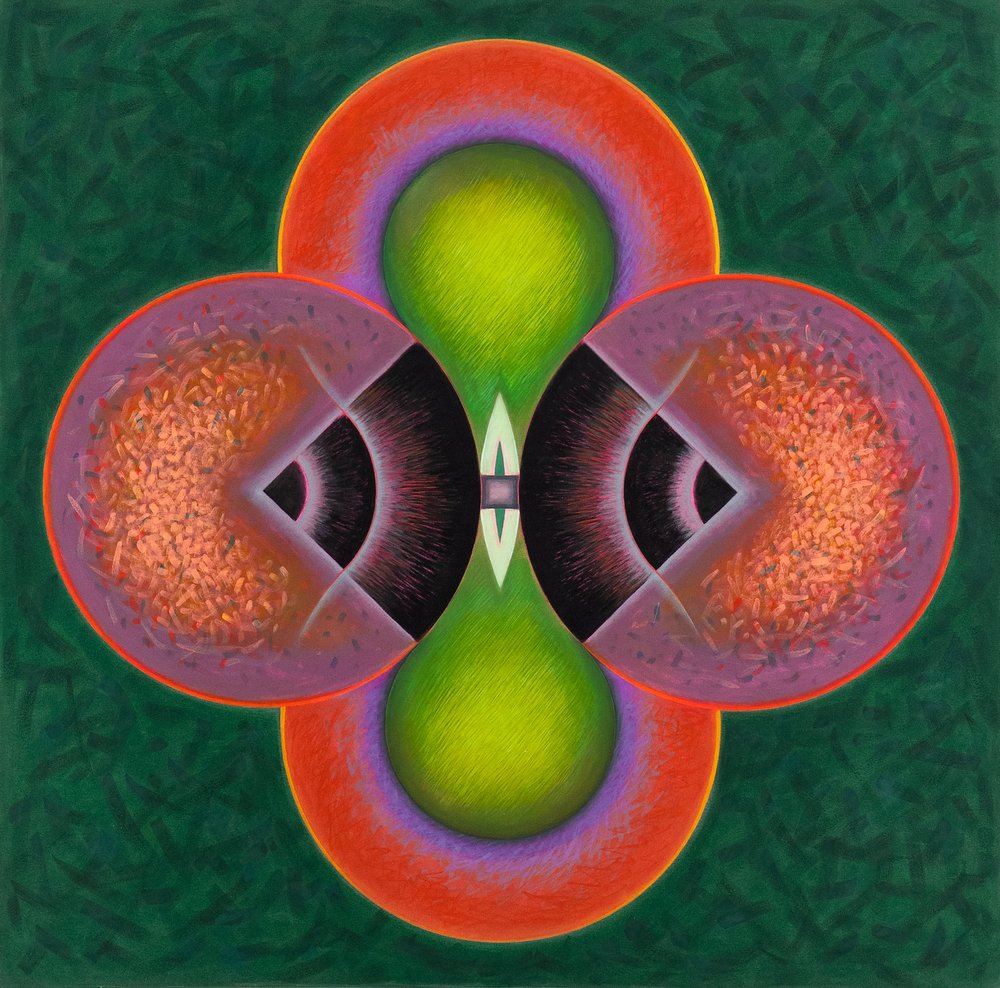
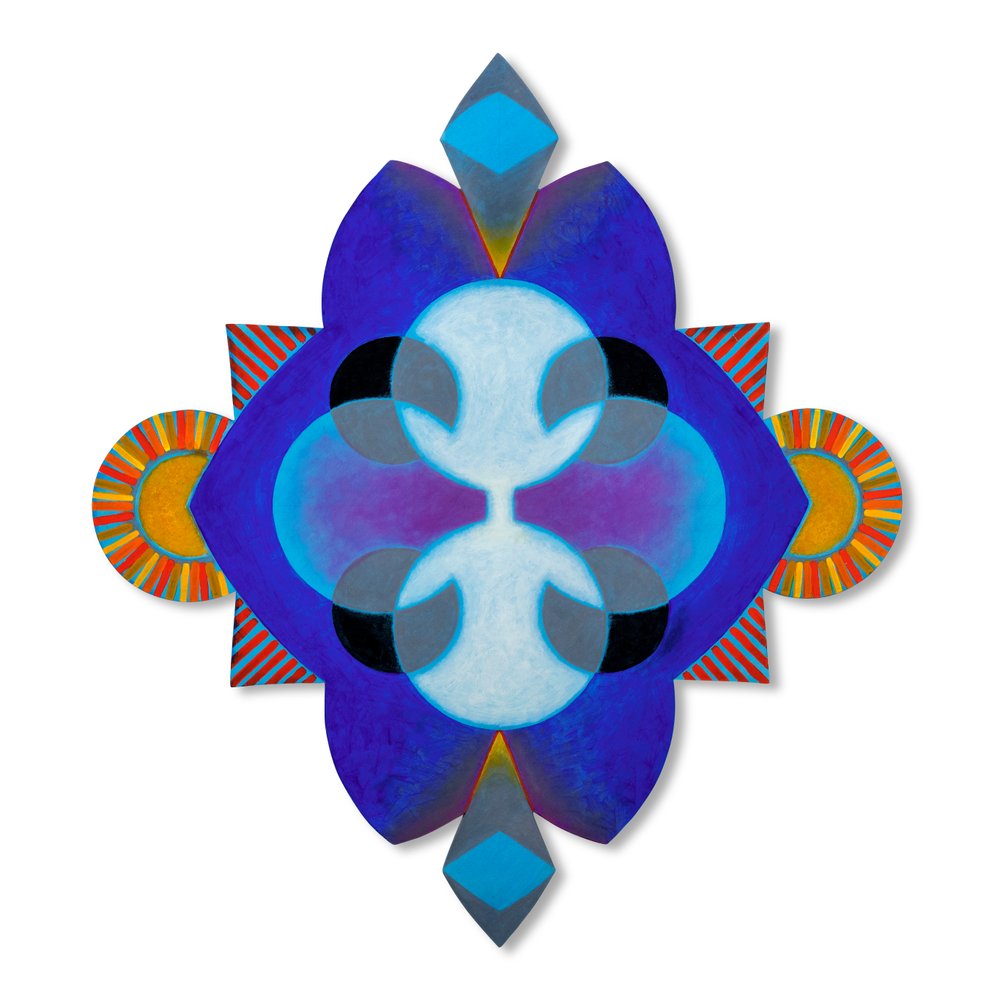
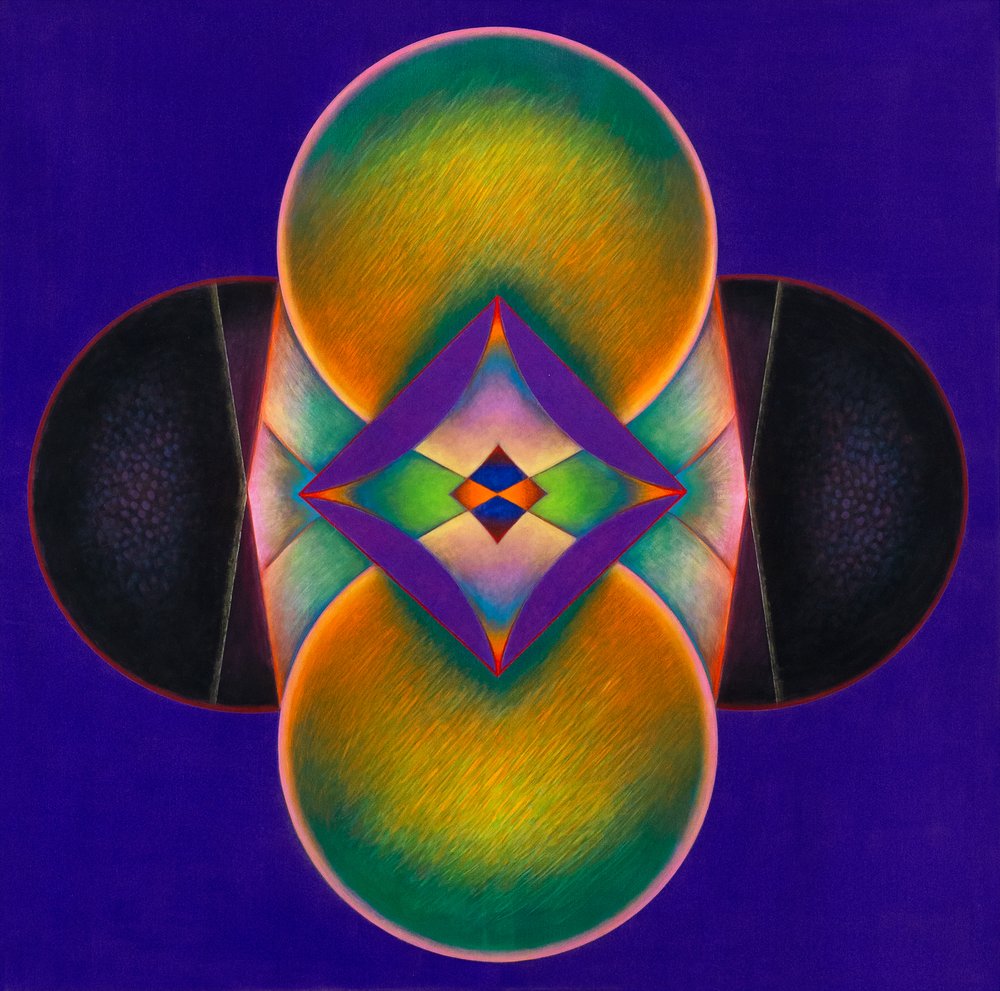
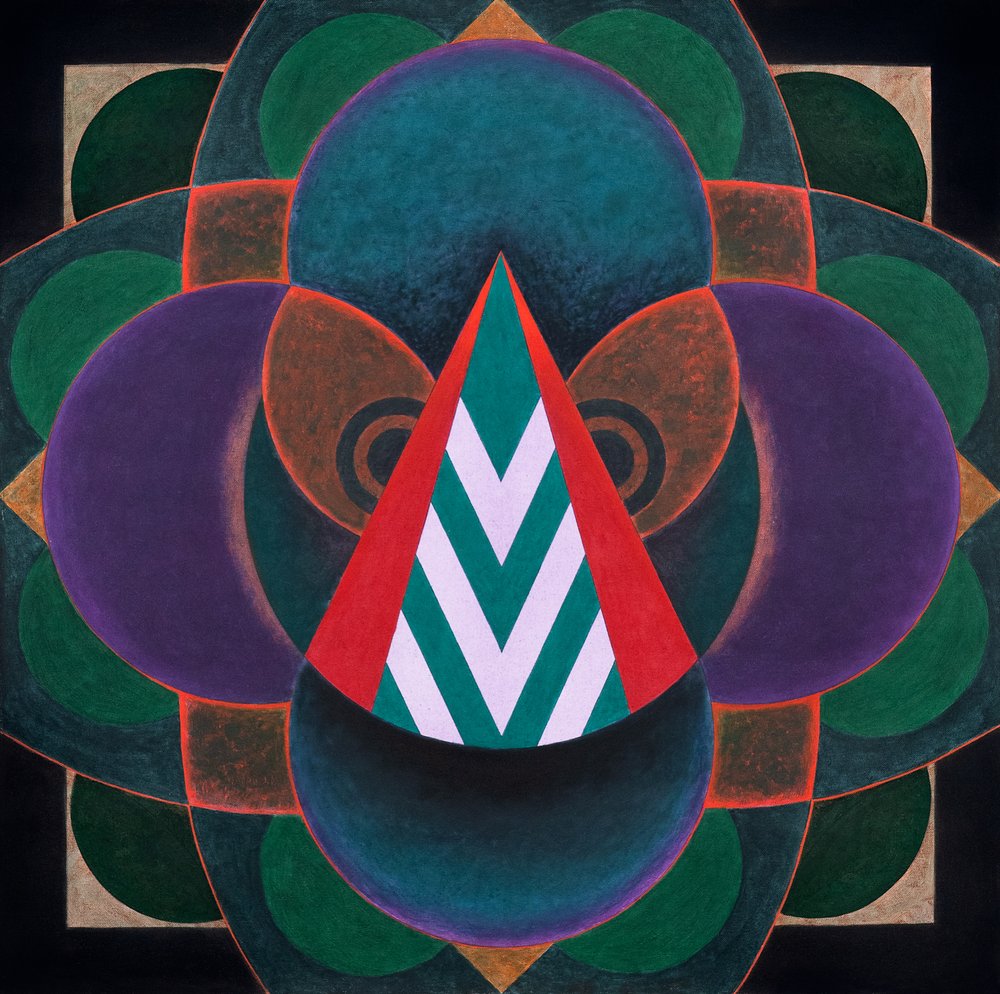
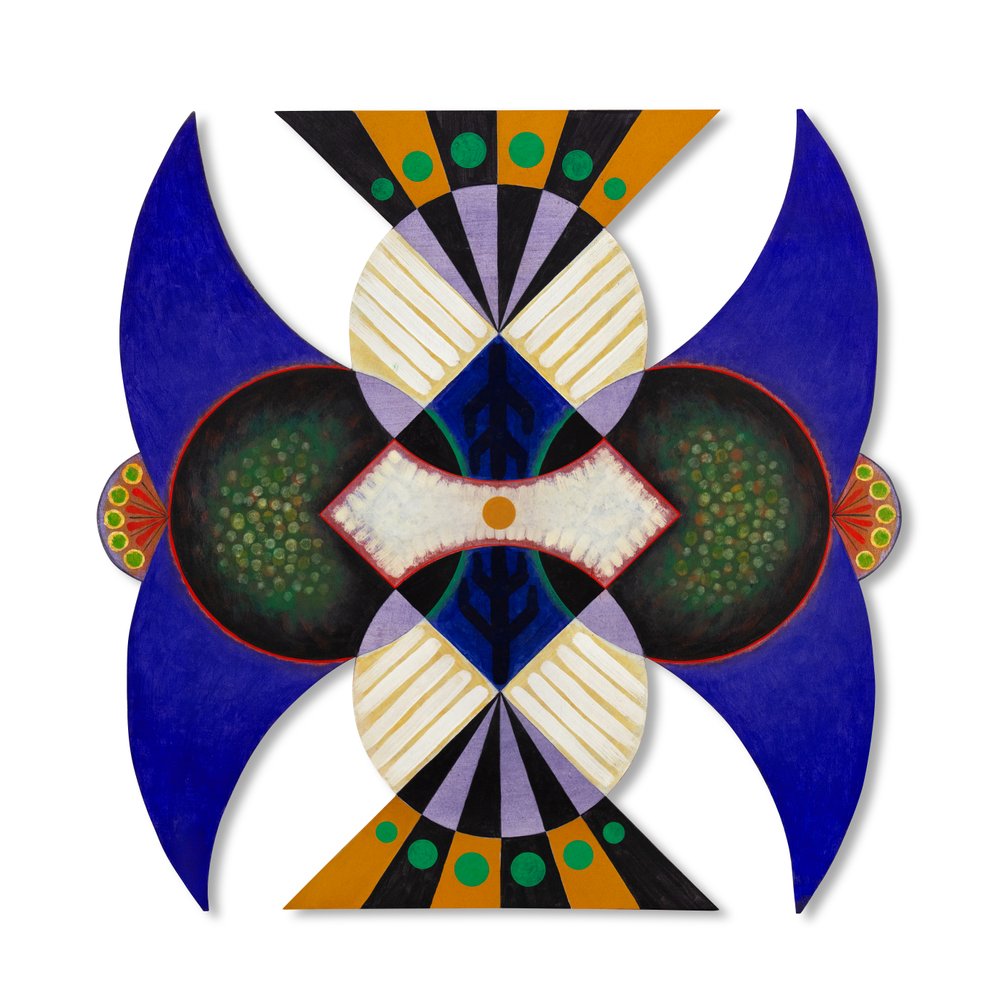
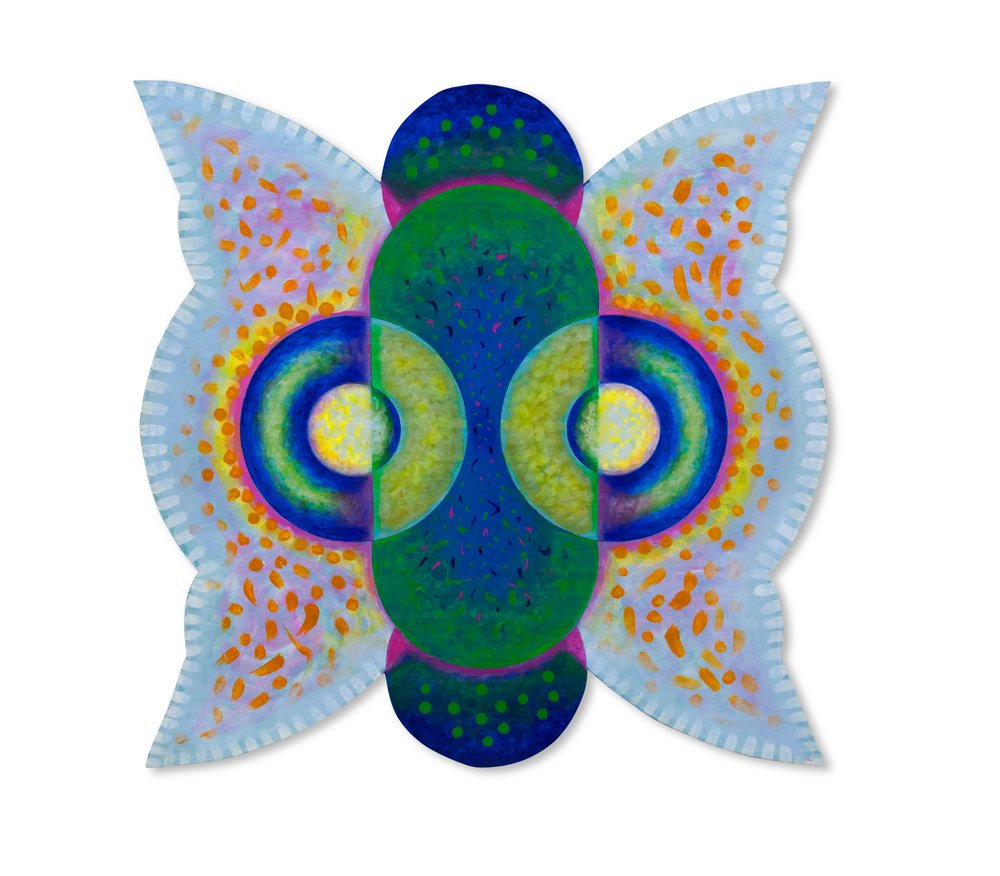
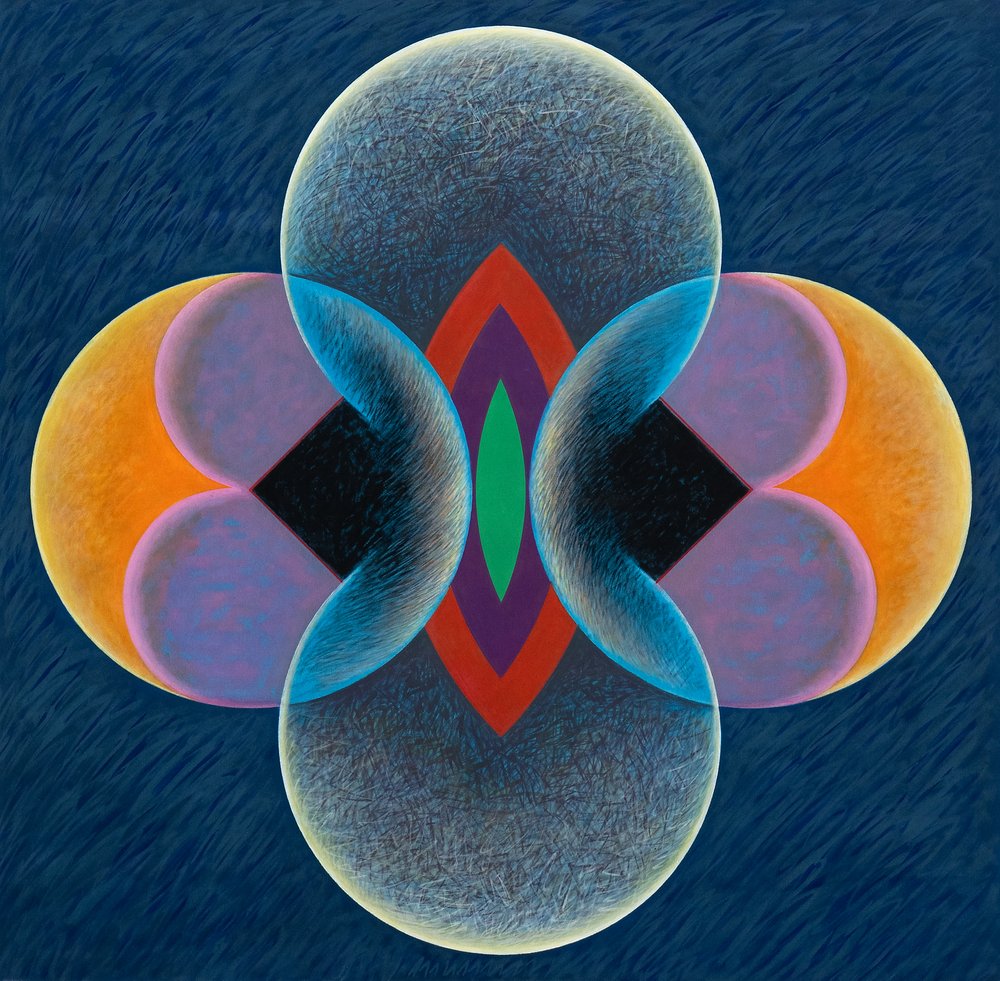
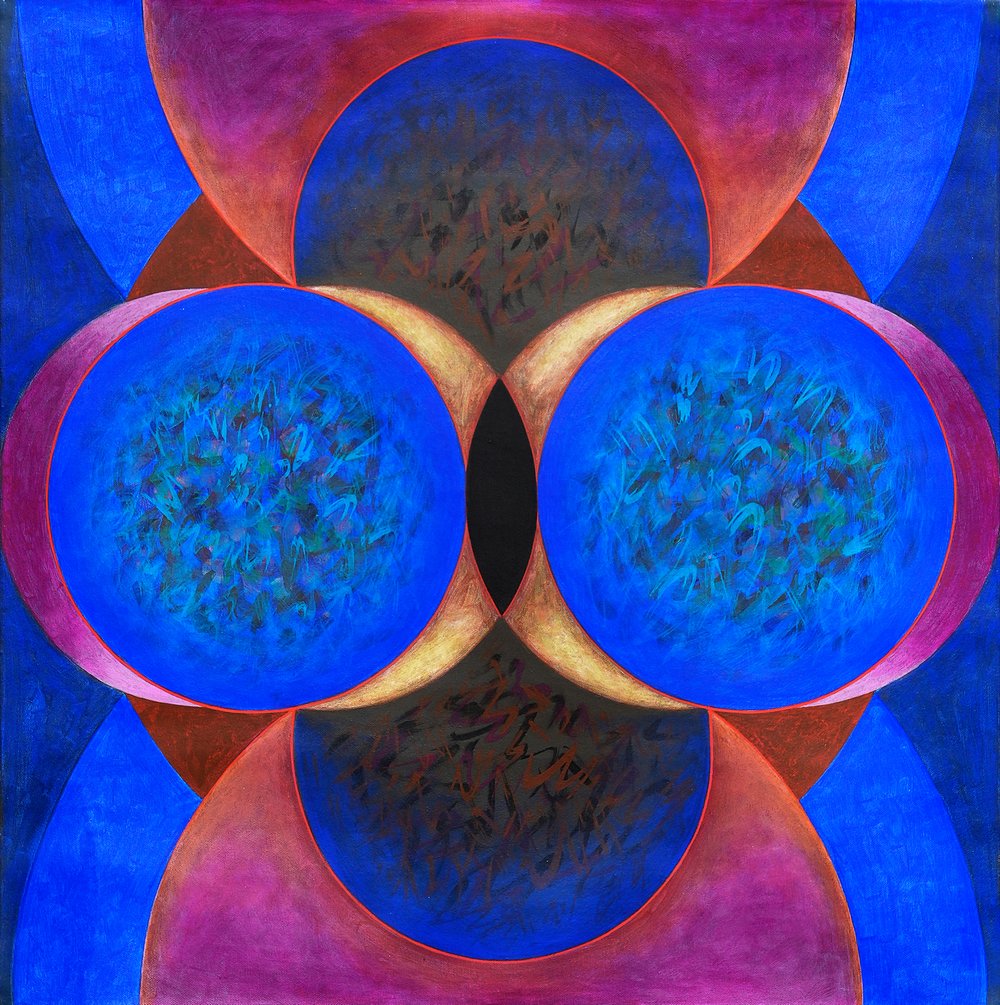
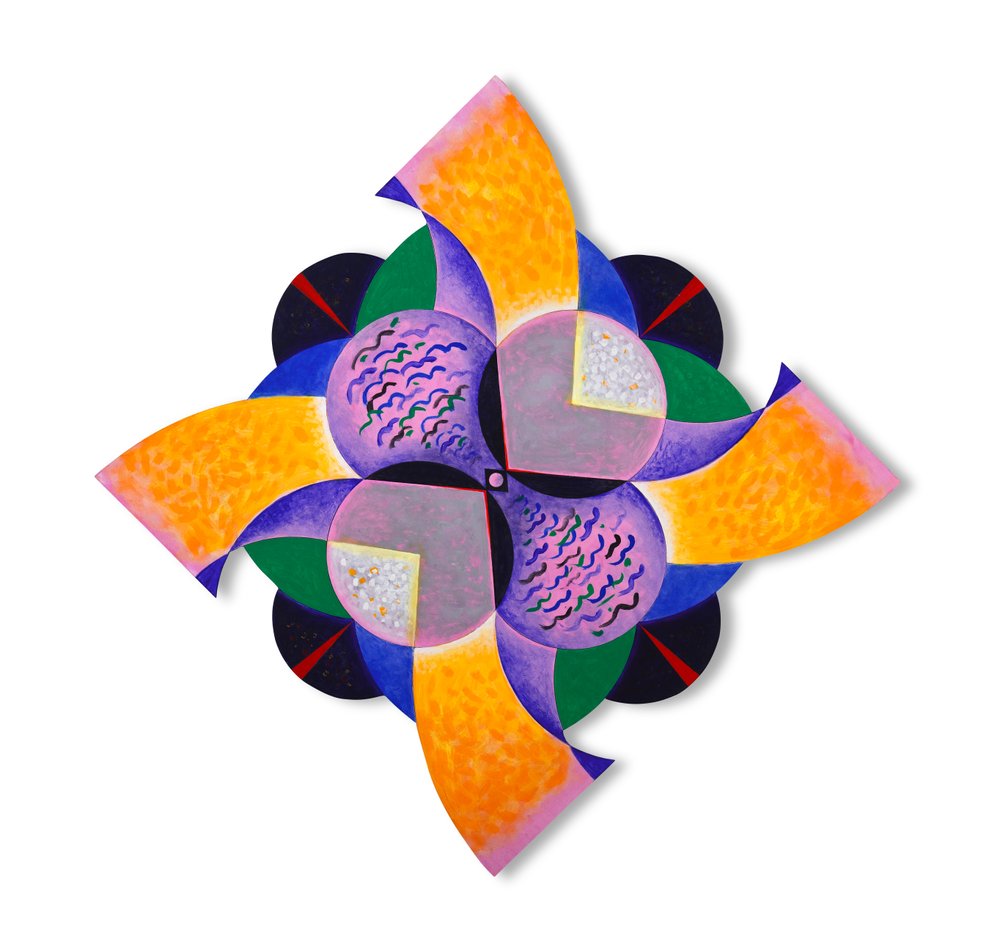
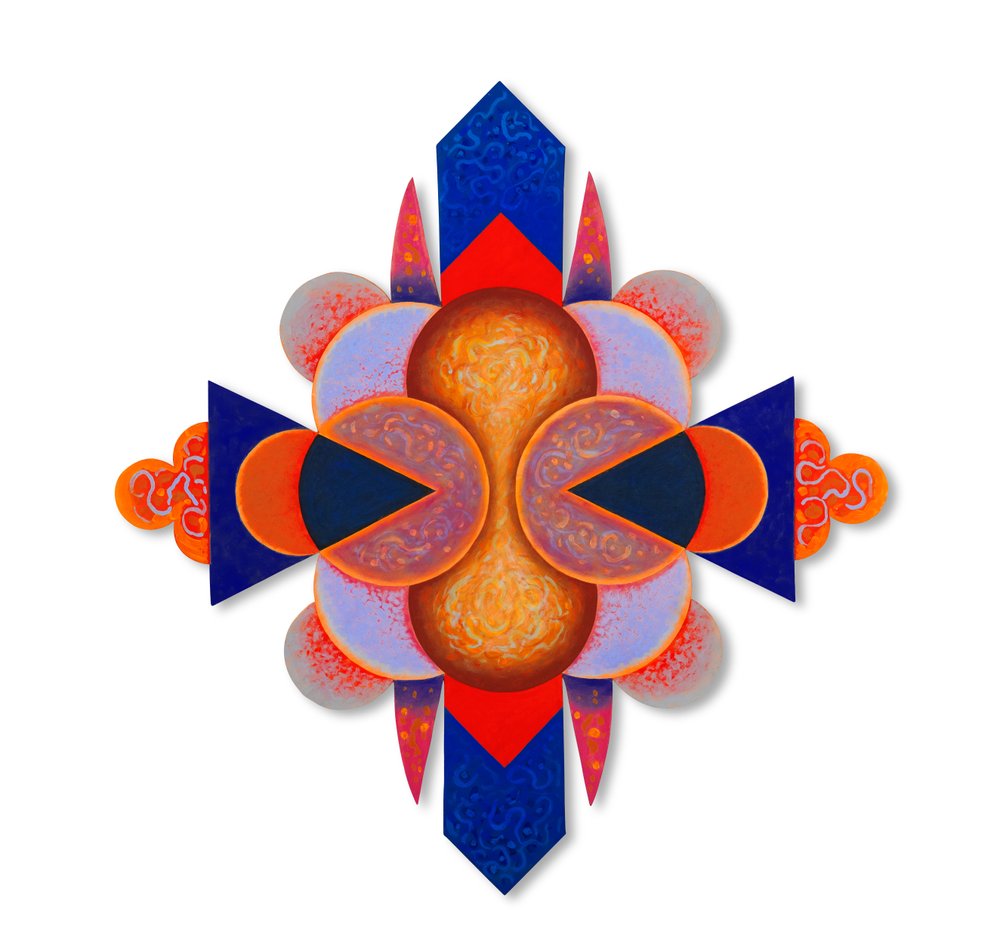
After years of searching, Mamtani arrived at the four-circle form as a recurring structure within his practice. The fourfold configuration evoked the four elements of earth, water, air and fire, as well as the four seasons and four directions. It also suggests a four-petalled lotus, evoking the unfolding of consciousness. More than a geometric device, it is a means of organising the world: a structure through which opposing forces could be held in balance and multiplicity brought into unity.
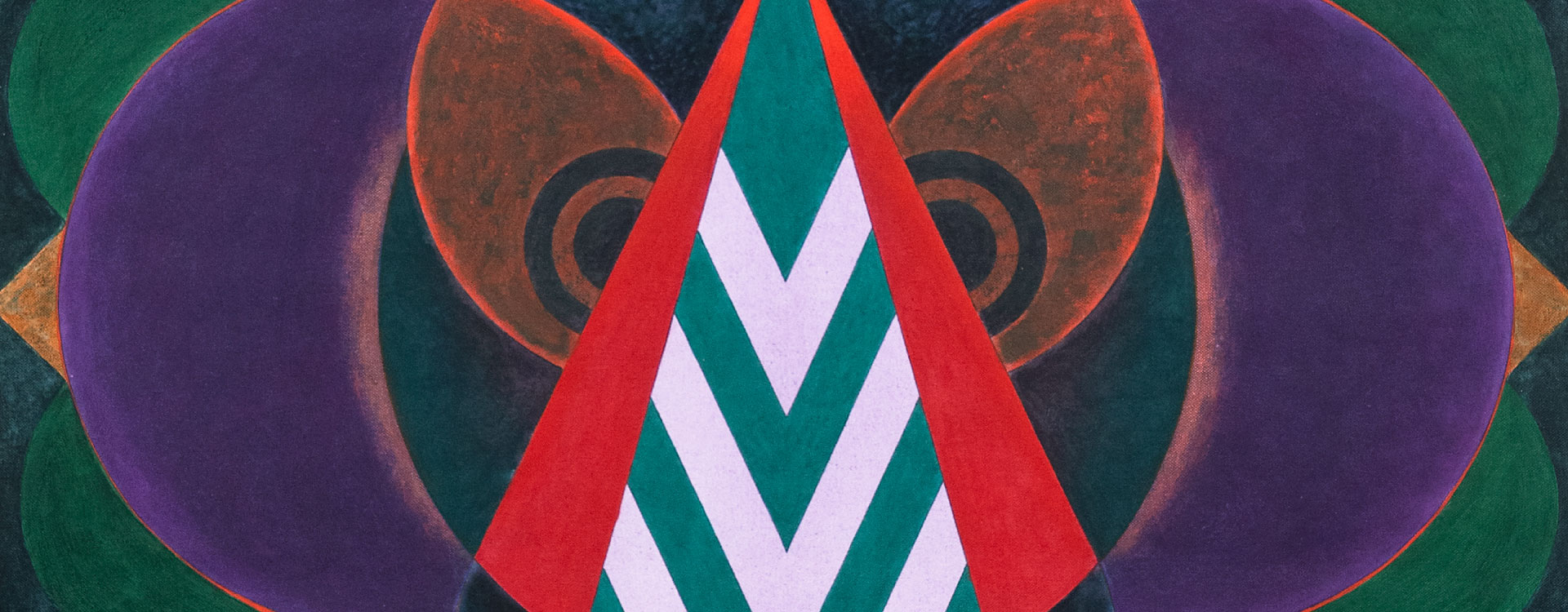
The exhibition brings together works from his two series of the 1990s, Centrovision and Cosmic Geometry. In Centrovision, the fourfold forms are more centripetal and contemplative, drawing the eye towards a concentrated centre or opening. In Cosmic Geometry, the same underlying structure becomes more expansive and intricate, unfolding through layers of geometry, pattern, texture and colour. Yet across both series, the centre remains the anchor, the source from which energy appears to radiate and towards which it returns.This centre can be understood in relation to the bindu, the primordial point in tantric thought: a point of origin and return, where the microcosm and macrocosm converge. Some of the forms in his works are densely textured, almost as if they’re made up of countless animated particles, while the changing hues suggest currents of energy moving through matter and space. The works appear at once contained and expansive, as though an entire universe were held within their symmetrical structures.
For Mamtani, the work is not the destination but an instrument, a means through which he undertakes an ongoing pursuit of self-knowledge. The continuous repetition of the same pattern across his canvases, rooted in the principles of tantra, becomes a means of invoking cosmic harmony while setting in motion a process of internal transformation. His lifelong engagement with geometry, colour and symbolism can thus be understood as an attempt to give a form to the formless, to make visible an order that exists beyond the material world. Mamtani finds another kind of home: not a place on a map, but a centre within; not geographical, but cosmic.